
Best Car Insurance for Retirees — Johns Creek
Free to compare
Why Your Premium Rose When Your Mileage Dropped
You opened your renewal notice last month and saw a rate increase you couldn't square with the facts: your driving record stayed clean, you haven't filed a claim in years, and you're driving half the miles you drove when you commuted daily. Nothing about your risk profile worsened, yet the premium climbed. This pattern hits retired drivers in Johns Creek with unusual frequency because many carriers raise rates based on age-band actuarial models even when individual driver behavior improves.
The disconnect stems from a pricing structure that treats retirees as a demographic category rather than evaluating actual mileage and claims history. Most carriers writing in Georgia offer mature-driver and low-mileage discounts that directly address this—but the discounts sit dormant on your policy until you activate them. The state mandates one of those discounts by law, yet fewer than half of qualifying Georgia retirees ever receive it because the application process requires action most agents never explain.
“The law requires insurers to offer the discount, not to apply it automatically—that procedural gap is why most qualifying retirees never see the reduction.”

Keep Your Georgia Coverage Right for Retirement
Get My Georgia Retiree Auto Insurance Quote10%
Georgia Statutory Discount Floor
O.C.G.A. §33-9-42 requires insurers to offer at least a 10% premium reduction to drivers who complete a state-approved defensive driving course. The statute is age-neutral but functions as the mature-driver discount floor for retirees statewide.
O.C.G.A. §33-9-42
The Mandate Most Johns Creek Retirees Never Claim
Georgia law requires every insurer writing auto policies in the state to offer a discount of at least 10% to drivers who complete a state-approved defensive driving course. The statute doesn't restrict eligibility by age: any driver 25 or older with a clean record qualifies. In practice, this functions as the primary mature-driver discount for retirees because it's the only senior-facing discount Georgia law mandates by percentage floor.
The mandate guarantees the minimum, not the maximum. Carriers may exceed 10% in their filed rates, but the statute doesn't require them to disclose how much above the floor they go. More importantly, the law requires insurers to offer the discount, not to apply it automatically. That procedural gap is why most qualifying Johns Creek retirees never see the reduction: the course completion certificate must be submitted to your carrier, and if your agent doesn't file it or your online renewal portal doesn't prompt you, the discount never attaches.
The approved course list is maintained by the Georgia Department of Driver Services. Online and in-person options exist, and completion certificates are typically valid for three years from the date of issue. Carriers vary in how they process submissions: some accept digital uploads through your policy portal, others require mailed paper certificates, and a few still route everything through your assigned agent. If you completed a course years ago and never saw a discount appear, the certificate either wasn't filed or it expired before your next renewal.
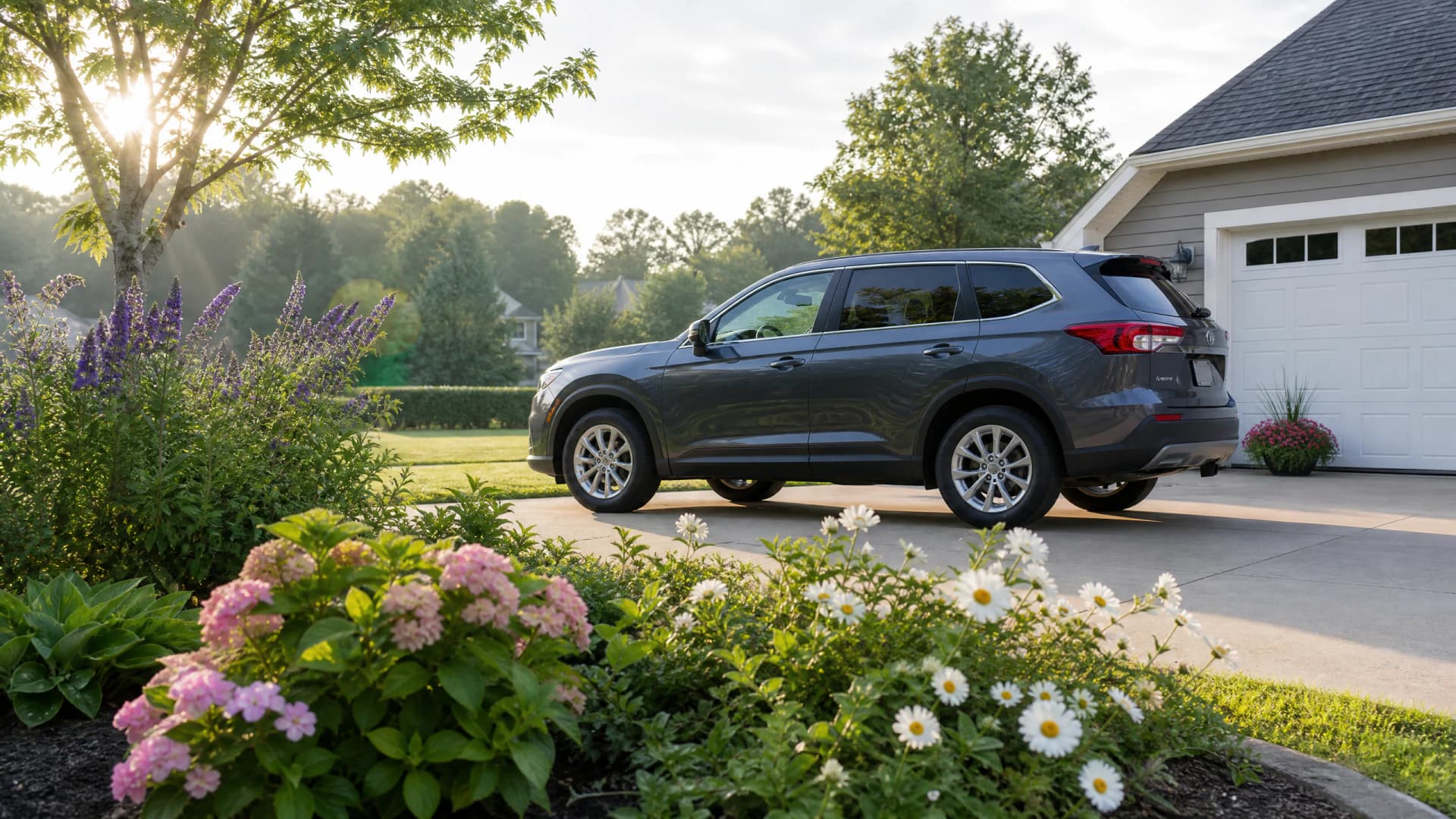
The discount won't appear unless you submit proof of course completion to your carrier—and most carriers won't notify you when the certificate expires three years later.
Related Articles







Low-Mileage Programs for Drivers Who No Longer Commute
Retiring typically cuts annual mileage in half or more. The Atlanta metro commute disappears, routine weekday errand patterns shift, and many Johns Creek retirees find they're driving 6,000 miles a year instead of 12,000. Standard auto policies price on the assumption of commuter-level exposure, so a mileage-based discount directly addresses the gap between your premium and your actual road time.
Low-mileage discounts fall into two categories: annual declaration programs and usage-based telematics. Annual declaration programs ask you to report your odometer reading once a year and apply a discount tier based on total miles driven. Geico, State Farm, and Allstate all offer versions of this in Georgia. Telematics programs like Progressive's Snapshot and Nationwide's SmartRide monitor actual driving behavior through a plug-in device or smartphone app, adjusting your rate based on miles, time of day, and braking patterns.
For retirees, the annual-declaration route is typically simpler. Telematics programs can penalize drivers who make short, frequent trips—exactly the pattern many retirees follow for errands, medical appointments, and social visits—because the algorithms weight cold starts and urban stop-and-go driving as higher risk. If your mileage is genuinely low and your driving pattern is predictable, the declaration-based discount delivers savings without the behavioral monitoring that telematics requires.
One procedural detail matters: most carriers require you to re-verify your mileage at each renewal. If you reported 6,000 miles last year and your carrier applied a low-mileage discount, that discount may not automatically renew unless you submit a new odometer reading. The requirement isn't universal, but it's common enough that retirees who assume the discount rolls over automatically often lose it without noticing until the renewal notice arrives with the higher rate restored.
25
Carriers Writing Johns Creek Policies
Twenty-five carriers are verified to write personal auto policies in Georgia and serve the Johns Creek market, spanning preferred, standard, and non-standard tiers. Not all offer the full suite of senior-focused discounts, and online quote availability varies widely by carrier.
Georgia auto insurance carrier filings, verified 2024

Full Coverage on a Paid-Off Vehicle: Still Worth the Cost?
Many Johns Creek retirees own a paid-off vehicle with moderate age and mileage—a 2015 sedan with 80,000 miles, for example. No lender requires collision and comprehensive coverage anymore, so the decision to keep or drop it becomes a pure cost-versus-risk judgment. The question isn't whether full coverage is available; it's whether paying for it still makes sense given the vehicle's current value and your financial position.
A common threshold is the 10% rule: if your annual collision and comprehensive premium exceeds 10% of the vehicle's current market value, the coverage is costing more per year than it's likely to return in a claim. For a vehicle worth $8,000, that threshold sits around $800 annually, or roughly $65 per month for those two coverages combined. Check your current renewal notice and isolate the collision and comprehensive line items—not the full premium, just those two. If they're above the threshold and you have savings sufficient to replace the vehicle in a total-loss scenario, dropping to liability-only becomes a reasonable path.
The calculus changes if your vehicle is your only one and replacement would strain your budget. Retirees on fixed income with limited liquid savings often choose to keep collision coverage even above the 10% threshold because self-insuring a total loss isn't financially viable. Comprehensive coverage, which covers theft, vandalism, weather damage, and animal strikes, costs less than collision in most Georgia markets and may be worth retaining even if you drop collision, particularly in Johns Creek where deer strikes and storm damage occur with some frequency.
Medical Payments and Medicare Coordination
Georgia doesn't require personal injury protection or medical payments coverage, so it's an optional line item on your policy. Once you're on Medicare, the interaction between your auto policy's medical payments coverage and Medicare's accident-related coverage becomes a coordination question most retirees never think through until a claim happens.
Medicare Part B covers accident-related injuries, but it functions as secondary payer when auto insurance medical payments coverage exists. If your policy carries $5,000 in medical payments coverage and you're injured in an accident, that $5,000 pays first, and Medicare picks up eligible costs beyond that amount. The medical payments coverage you're paying for on your auto policy may duplicate protection you already have through Medicare, depending on your supplemental coverage and out-of-pocket exposure.
If you carry a Medicare Supplement (Medigap) plan that covers most or all of your Medicare cost-sharing, the auto policy's medical payments line may be redundant. If you're on a Medicare Advantage plan with higher out-of-pocket limits, keeping $2,500 to $5,000 in medical payments coverage can function as gap insurance for accident-related bills that hit before Medicare processes. The decision turns on your specific Medicare structure and your comfort with out-of-pocket risk, not on a universal rule.

Compare Carriers With Your Actual Profile
Generic rate calculators ask for age, vehicle, and ZIP code, then return a range that may or may not reflect how a given carrier actually prices a retired driver with low mileage and a clean record. The only way to see which Johns Creek carriers treat your profile favorably is to request quotes that include your mature-driver course completion, your annual mileage, and any other discount you qualify for. Three to five carrier quotes give you enough range to identify whether your current rate sits in the competitive middle or whether you're paying significantly above what other carriers would charge for identical coverage.
Start with the carriers that allow online quoting and accept digital certificate uploads: Geico, Progressive, and Nationwide all offer both. If you're a veteran or active military family member, add USAA. If you prefer working through an agent and your current carrier is State Farm or Allstate, request a re-quote with all applicable discounts verified before you shop elsewhere—sometimes your current carrier will match or beat a competitor's offer once they see you're comparing. Request quotes with identical liability limits and deductibles so you're comparing structure to structure, not coverage level to price.
Which Johns Creek Carriers Apply Senior Discounts Best
State Farm, Geico, and Progressive all write standard and preferred-tier auto policies in Georgia and accept the state-approved defensive driving course for the statutory discount. State Farm typically processes certificates through your assigned agent, which introduces a manual filing step that can delay application until the next full renewal cycle. Geico and Progressive both offer online portals where you can upload course completion documentation directly, and the discount usually applies within one billing cycle once the certificate is verified.
USAA writes preferred-tier policies for military-affiliated retirees and applies both the mature-driver discount and a broader set of low-mileage program options, including their annual mileage verification discount for drivers logging fewer than 7,500 miles per year. Allstate and Nationwide also write in Johns Creek and offer mature-driver discounts, though both route certificate submissions through agents rather than allowing direct online filing. For retirees managing a parent's policy remotely, the online-portal carriers reduce the procedural friction of keeping discounts active across renewal cycles.
Get Your Free Quote
Get My Georgia Retiree Auto Insurance QuoteFrequently Asked Questions
Do I qualify for Georgia's mature-driver discount if I'm over 65?
Georgia's statutory discount under O.C.G.A. §33-9-42 requires completion of a state-approved defensive driving course, not age alone. Any driver 25 or older with a clean record qualifies once they complete the course and submit the certificate to their carrier. The 10% minimum is guaranteed by law, but the discount won't appear until you file proof of completion.
How long does the defensive driving course certificate stay valid?
Course completion certificates are typically valid for three years from the date of issue. Most carriers require you to submit a new certificate before the expiration date to keep the discount active at renewal. If the certificate expires and you don't renew it, the discount drops off your policy and you'll pay the higher rate until you complete another approved course.
Will switching carriers reset my mature-driver discount?
Yes. When you move to a new carrier, you'll need to submit your course completion certificate again even if it's still valid. The discount doesn't transfer automatically between insurers. Request the new carrier's certificate submission process during the quote stage so you can file it before your first payment and avoid paying the higher rate while they process it.
Can I drop collision coverage and keep comprehensive on a paid-off car?
Yes. Collision and comprehensive are separate coverages, and you can drop one while keeping the other. Many Johns Creek retirees drop collision on older paid-off vehicles but retain comprehensive because it costs less and covers theft, weather damage, and animal strikes. Check whether your vehicle's value and your savings make self-insuring collision reasonable before you drop it.
Do low-mileage discounts apply if I only drive locally in Johns Creek?
Yes, as long as your total annual mileage falls below the carrier's low-mileage threshold. Most Georgia carriers set that threshold between 7,500 and 10,000 miles per year. Local-only driving typically qualifies, but you'll need to verify your odometer reading annually and report it to your carrier to keep the discount active.
Does Medicare replace the need for medical payments coverage on my auto policy?
Not automatically. Medicare Part B covers accident injuries, but it pays secondary when auto insurance medical payments coverage exists. If you carry a Medigap plan with low out-of-pocket limits, the auto policy's medical payments line may duplicate coverage you already have. Review your Medicare structure and accident-related cost-sharing before deciding whether to keep or drop it.