
Usage-Based Car Insurance for Retirees — Atlanta, GA
Free to compare
When Your Agent Pushes Telematics After You Took the Course
You submitted your defensive driving certificate three months ago, confirmed Georgia's 10% statutory discount appeared on your renewal, and now your agent is calling to enroll you in their usage-based program. The pitch is compelling: save even more by proving you drive safely. But you already drove safely for forty years without a device monitoring every trip, and the question no one is answering clearly is whether the additional savings justify adding surveillance to a policy you just reduced.
Usage-based insurance programs measure braking, acceleration, speed, and mileage through a plug-in device or smartphone app. Carriers market them as personalized pricing: drive well, pay less. For retirees who no longer commute and put 4,000 miles annually on a paid-off sedan, the promise sounds reasonable until you compare it against the low-mileage discount you may already qualify for without installing anything.
“The telematics device measures behavior the carrier is not currently penalizing you for.”

Keep Your Georgia Coverage Right for Retirement
Get My Georgia Retiree Auto Insurance Quote10%
Georgia Statutory Course Discount Floor
O.C.G.A. §33-9-42 requires insurers to offer at least 10% off for drivers 25+ with clean records who complete a state-approved defensive driving course. The carrier may exceed this floor but cannot offer less.
O.C.G.A. §33-9-42
Two Discount Pathways That Get Conflated in Agent Scripts
Georgia law mandates the mature-driver discount for course completion. That 10% is guaranteed, requires no monitoring, and renews when you retake the course per the carrier's schedule. Low-mileage discounts are carrier-specific, typically triggered when you certify annual mileage below a threshold such as 7,500 or 10,000 miles. You estimate your mileage at renewal; the carrier applies the discount. No device, no tracking, no data upload.
Usage-based programs layer on top of those discounts. Progressive Snapshot, State Farm Drive Safe & Save, Nationwide SmartRide, and Allstate Drivewise all measure trip-level behavior: hard braking events, nighttime driving, rapid acceleration, minutes on the road. The discount starts as a participation credit and adjusts based on your driving score. Carriers present this as personalized pricing, but the baseline they personalize from already includes the mileage you drive and the clean record you carry.
The structural confusion arises because agents describe usage-based programs as rewarding low-mileage drivers. That is true in a narrow sense: fewer miles means fewer trips, fewer trips means fewer braking events, and a lower score ceiling. But a retiree driving 4,000 miles annually in daylight hours on residential streets already qualifies for the low-mileage discount without submitting to trip-by-trip scoring. The telematics device measures behavior the carrier is not currently penalizing you for.

The blocker: your agent cannot tell you how much the telematics program will save you relative to the low-mileage discount you already qualify for, because the score is forward-looking and the discount ladder is proprietary.
Related Articles

Usage-Based Insurance for Roswell Retirees
6/15/2026

Usage-Based Auto Insurance Georgia Seniors
6/15/2026

Cheapest Insurance for Retired Couples Atlanta
6/15/2026

Cheapest Car Insurance for Atlanta Retirees
6/15/2026

Usage-Based Auto Insurance for GA Retirees
6/15/2026

Usage-Based Auto Insurance for GA Retirees
6/15/2026

What the Monitoring Actually Penalizes in Retirement Driving Patterns
Telematics devices flag hard braking events defined by deceleration rate, not context. A yellow light you chose to stop for rather than run registers the same as slamming the brakes to avoid a collision. Urban intersections in Midtown, Buckhead, and along Peachtree trigger more events than suburban routes in Sandy Springs or Marietta, even when your driving is identical. If your errands concentrate in higher-density areas, your score reflects geography as much as behavior.
Nighttime driving penalties apply regardless of traffic. A 9 p.m. trip to the pharmacy scores worse than the same trip at noon, even though Atlanta evening traffic at that hour is lighter than midday congestion. Some programs penalize any driving after 10 p.m., a threshold that conflicts with retirees who prefer late grocery runs to avoid crowds.
Mileage per trip factors into scoring but in ways carriers do not disclose. Short trips to the same locations daily can score worse than fewer longer trips weekly, depending on the algorithm's trip-frequency weighting. A retiree running errands in a two-mile radius may score lower than someone making one twenty-mile trip per week, even though annual mileage is identical. The program markets savings for low-mileage drivers but penalizes the trip patterns many retirees actually drive.
25
Carriers Writing Georgia Auto Policies
At least 25 carriers file auto policies in Georgia, including State Farm, Geico, Progressive, Nationwide, Allstate, USAA, and Travelers. Comparing mature-driver and low-mileage discount structures across this field reveals which carriers deliver retiree-specific savings without telematics enrollment.
Georgia Department of Insurance carrier filings

Low-Mileage Discount Comparison Without Device Installation
State Farm, Allstate, and Nationwide offer annual mileage discounts you certify at renewal. You report your odometer reading or estimated annual miles; the carrier applies a tier discount if you fall below their threshold. No device, no monitoring, no score adjustment mid-term. The discount renews automatically when you re-certify mileage each year. If your annual mileage sits around 5,000 miles, this structure delivers predictable savings without uploading trip data.
Geico and Progressive fold mileage into their rating but require telematics enrollment to unlock incremental discounts beyond the base rate. If you decline the device, you receive their standard rate adjusted for the mileage you report, but you forfeit the additional discount tier telematics unlocks. For a retiree already driving minimal miles with a clean record, the question becomes whether the gap between the standard low-mileage rate and the telematics-adjusted rate justifies the monitoring.
USAA applies mileage at quote and renewal without requiring device installation for members, though SafePilot remains available for those who want it. Amica and Auto-Owners structure mileage discounts similarly: you report, they apply, no device required. Erie and American Family both underwrite in Georgia through regional agents who can walk the discount ladder without requiring telematics enrollment. The pathway exists; agents default to telematics because it allows continuous re-underwriting in the carrier's favor.
Positioning Yourself Against the Enrollment Pitch
When an agent pushes telematics, ask three questions they cannot deflect. First: what is my current annual mileage discount, and what additional percentage would the telematics program add if I score perfectly? Most agents will not answer with specifics because the discount ladder is proprietary and score-dependent. Without that number, you are enrolling blind. Second: does the monitoring period lock my discount, or does it re-score me every renewal? Continuous monitoring means your rate can rise if your driving pattern changes, even when your record stays clean. Third: can I obtain the same mileage-based savings by certifying odometer readings annually instead? If yes, the device adds surveillance without adding value.
Compare your current premium against quotes from carriers that structure low-mileage discounts without telematics. If you are paying $95 monthly with the 10% statutory course discount already applied, and a competitor quotes $82 monthly with their mileage certification discount, the telematics device your current carrier is pushing becomes irrelevant. The savings came from switching carriers, not from installing monitoring.
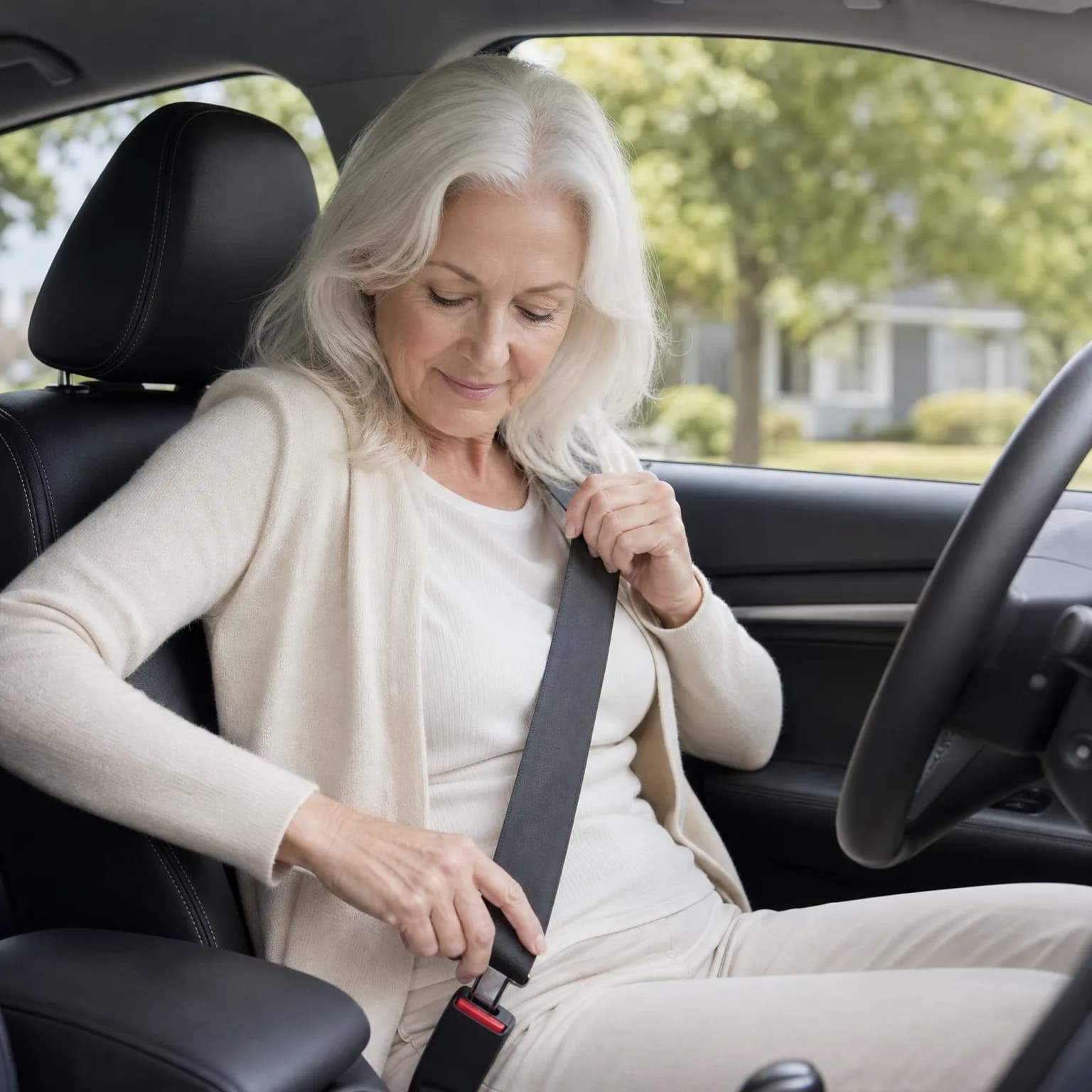
Get Quotes from Carriers That Price Your Profile Without Surveillance
Run quotes from State Farm, Nationwide, Amica, and Erie specifying your actual annual mileage, your defensive driving course completion, and your clean record. Ask each agent whether their low-mileage discount requires device installation or annual odometer certification. Compare the quote against your current premium after the statutory 10% course discount. If the gap is $15 monthly or more, switching delivers $180 annually without uploading trip data to a server you do not control. That is the decision: incremental telematics savings from your current carrier versus a lower base rate at a competitor that does not require monitoring to recognize you drive 4,000 miles a year in daylight.
How Atlanta Carriers Structure Usage-Based Enrollment
Progressive Snapshot enrolls you for a monitoring period, typically six months. Hard braking and high-mileage trips reduce your score; smooth driving in low-traffic windows raises it. The discount applies at the end of the period and renews based on ongoing monitoring if you stay enrolled. State Farm Drive Safe & Save monitors continuously through their mobile app and adjusts your rate every renewal based on rolling behavior data. Both programs allow you to opt out, but the discount disappears when you do.
Nationwide SmartRide and Geico DriveEasy function similarly but cap the monitoring window. You plug in the device, drive for a set period, and receive a discount that locks for the policy term. USAA offers SafePilot but restricts eligibility to members, and Travelers IntelliDrive runs a participation discount upfront with adjustments at renewal. Each program markets itself as savings for safe drivers, but none publish the score algorithm or the discount ladder, so you cannot predict your outcome before enrolling.
Get Your Free Quote
Get My Georgia Retiree Auto Insurance QuoteFrequently Asked Questions
Does Georgia require car insurance companies to offer senior discounts?
Yes. O.C.G.A. §33-9-42 requires insurers to offer at least 10% off for drivers 25 and older with clean records who complete a state-approved defensive driving course. The discount is not automatic; you must submit your completion certificate to your carrier and request it.
Can I get a low-mileage discount without installing a telematics device?
Yes, with most carriers. State Farm, Nationwide, Allstate, Amica, and Auto-Owners apply mileage discounts when you certify your annual miles at renewal, either through odometer reporting or estimated mileage. No device or app installation required.
What happens to my telematics discount if I opt out mid-term?
The discount disappears immediately or at your next renewal, depending on the carrier's program structure. Progressive Snapshot and State Farm Drive Safe & Save tie the discount to active monitoring; removing the device or uninstalling the app removes the discount.
Do usage-based programs penalize driving at night even in low traffic?
Yes. Most telematics programs apply a nighttime penalty based on clock time, not traffic density. A trip after 10 p.m. scores worse than the same route at noon, regardless of actual road conditions.
How do I compare my current rate against carriers that don't require telematics?
Request quotes from State Farm, Nationwide, Erie, and Amica specifying your annual mileage, completion of Georgia's approved defensive driving course, and coverage limits matching your current policy. Ask whether their low-mileage discount requires device installation or just annual certification.