
Full Coverage for Paid-Off Cars — Sandy Springs, GA
Free to compare
When the Payment Stops, the Premium Question Starts
You just paid off your 2016 Camry. The monthly payment is gone, but your auto insurance premium did not drop a dollar. Your carrier still charges the same collision and comprehensive premiums it charged when you owed $12,000 on the loan. The loan required full coverage; now that requirement is gone, but your agent never mentioned it and your renewal notice arrived unchanged.
Most retirees in Sandy Springs discover this gap at renewal: the lender's coverage mandate disappears the day the loan closes, but the premium continues indefinitely unless you actively decide to change it. Georgia law requires liability coverage only. Collision and comprehensive are optional the moment you own the vehicle outright. Whether they still make financial sense depends on math your carrier will never volunteer.
“Your carrier prices collision as if the loan still exists; payoff status does not lower the premium, only dropping the coverage does.”

Keep Your Georgia Coverage Right for Retirement
Get My Georgia Retiree Auto Insurance Quote$25,000
Georgia Liability Minimum Per Person
Georgia statute requires $25,000 bodily injury per person, $50,000 per accident, and $25,000 property damage. Many retirees carry higher limits to protect retirement assets from lawsuit exposure after an at-fault accident.
O.C.G.A. Title 33, Chapter 34
What Full Coverage Actually Costs You Now
Collision pays to repair your car after an accident you caused. Comprehensive pays for theft, vandalism, hail, fire, and hitting a deer. Both coverages charge a premium based on your car's current value and your chosen deductible, not whether you still owe money. A paid-off 2016 sedan and a financed 2016 sedan cost the same to insure for collision and comprehensive.
Your deductible is the amount you pay out of pocket before the carrier pays anything. Most Sandy Springs retirees carry a $500 or $1,000 deductible from their working years. When the car was worth $18,000 and financed, that made sense. When the car is worth $7,500 and paid off, the deductible becomes a larger share of any claim, and total-loss scenarios shift the math.
If your car is totaled, the carrier pays actual cash value minus your deductible. A $7,500 car with a $1,000 deductible nets you $6,500. If you have been paying $600 annually for collision and comprehensive combined, you recover that premium cost in about eleven years of claim-free driving. But most total losses happen in the first five years of ownership, not the last.
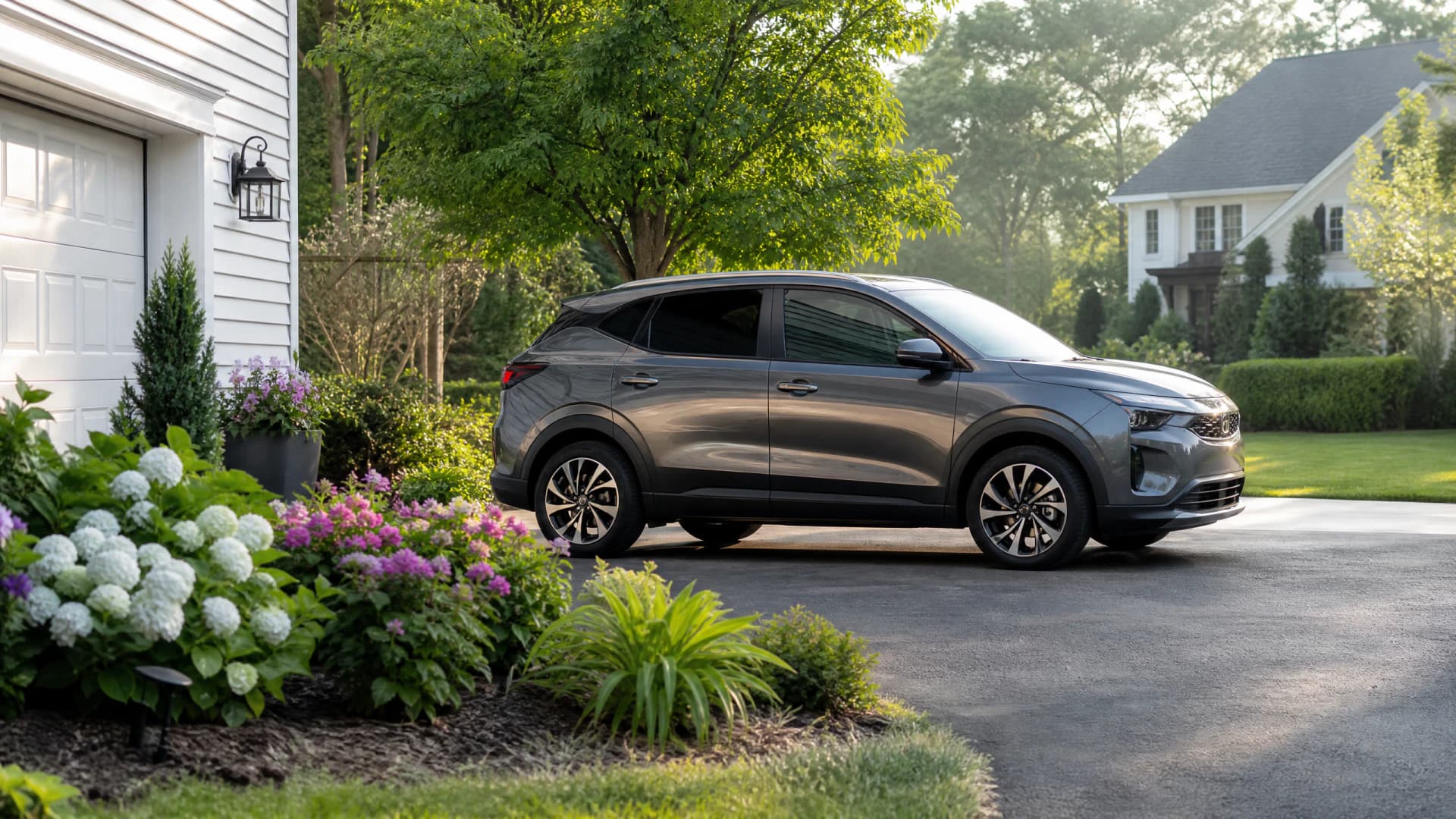
Your carrier prices collision and comprehensive as if the loan still exists. Payoff status does not lower the premium; only dropping the coverage does.
Related Articles







What Georgia Law Actually Requires
Georgia mandates liability coverage: $25,000 bodily injury per person, $50,000 per accident, and $25,000 property damage. That coverage pays the other driver's costs when you cause an accident. It does not pay to fix your own car. Collision and comprehensive are optional under state law the moment your lender releases the title.
Many Sandy Springs retirees carry higher liability limits than the state minimum because retirement assets are exposed in a lawsuit after an at-fault accident. A $100,000 per person limit or a $300,000 umbrella policy protects your savings if you injure someone. But those decisions are separate from the collision and comprehensive question. You can raise liability limits and drop physical-damage coverage at the same time.
Your lender required full coverage to protect their loan collateral, not your financial position. Once the loan closes, the coverage decision belongs to you. No Georgia statute requires you to keep insuring a paid-off car against physical damage. Liability coverage remains mandatory as long as the car is registered and driven.
10%
Georgia Course Discount Floor
Georgia law requires insurers to offer at least a 10 percent discount to drivers who complete a state-approved defensive driving course. That discount applies to your total premium, including collision and comprehensive, reducing the cost if you choose to keep full coverage.
O.C.G.A. §33-9-42

How to Decide Without Guessing
Pull your current renewal notice. Find the annual premium for collision and comprehensive combined. Divide your car's actual cash value by that annual cost. If the answer is under three years, the premium consumes more than one-third of the car's value every three years, a threshold where many retirees conclude the coverage no longer justifies its cost.
Consider how you would handle a total loss out of pocket. If your car were totaled tomorrow, could you replace it from savings without financial strain? If yes, dropping collision and comprehensive and banking the premium often makes more sense than paying a carrier to cover a risk you can absorb. If no, keeping the coverage buys peace of mind, but compare the premium against setting aside that same amount monthly into a vehicle-replacement fund you control.
Georgia-approved defensive driving courses reduce your total premium by at least 10 percent under state law. If you decide to keep full coverage, completing the course lowers what you pay. If you decide to drop collision and comprehensive, the discount still applies to your liability premium. Either way, the course pays for itself in premium reduction within the first year for most Sandy Springs retirees.
What Happens When You Drop Coverage
Call your carrier or agent and request removal of collision and comprehensive effective your next renewal date or mid-term if you want the change sooner. Georgia law allows mid-term changes; your carrier must prorate the refund. Most carriers process the change within 48 hours and issue a new declaration page showing liability-only coverage.
Your premium drops immediately. The refund for the unused portion of collision and comprehensive appears as a credit on your next billing cycle or as a check if you paid the full term in advance. Keep the new declaration page in your vehicle; it proves you carry the liability coverage Georgia requires, and that is all the law mandates once the car is paid off.
You cannot reinstate collision or comprehensive later to cover damage that already happened. If you drop the coverage today and have an accident next month, you pay the repair cost yourself. The decision is reversible, but it applies only to future incidents. Most retirees who drop full coverage do so because they have decided they can absorb a total-loss event from savings or would replace the car regardless of insurance payout.

Compare What Carriers Charge Before You Decide
Premium for the same coverage varies widely among carriers writing in Georgia. State Farm, GEICO, Progressive, and Nationwide all write coverage for retirees in Sandy Springs, and their collision and comprehensive premiums for the same vehicle and deductible can differ by hundreds of dollars annually. If you decide to keep full coverage, compare what each carrier charges and whether they apply the state-mandated mature-driver discount without requiring you to ask.
Request quotes for liability-only and for full coverage with your current deductible. The difference between the two is what you are paying annually to insure your car against physical damage. Then decide whether that cost justifies covering an asset you own outright and drive fewer than 5,000 miles per year. The math that made sense when you were commuting forty miles daily stops working when your highest-mileage week is a trip to the grocery store and a doctor's appointment.
The Break-Even Question Nobody Explains
Check your car's actual cash value on your renewal declaration page or look it up through your state DMV valuation tool. Then divide that value by your annual collision and comprehensive premium. If the result is under two years, you are paying more than 50 percent of the car's value every two years just to insure it against physical damage. That threshold signals the coverage may no longer be worth the cost.
Add your deductible into the calculation. If your car is worth $6,000 and your deductible is $1,000, the maximum claim payout is $5,000. If your annual premium for both coverages is $550, you break even in about nine years of claim-free driving. Most retirees replace their vehicle or drive it until mechanical failure long before nine years pass. The coverage protects a shrinking asset while the cost stays flat.
Get Your Free Quote
Get My Georgia Retiree Auto Insurance QuoteFrequently Asked Questions
Does Georgia require full coverage on a paid-off car?
No. Georgia law requires liability coverage only: $25,000 bodily injury per person, $50,000 per accident, and $25,000 property damage. Collision and comprehensive are optional once your lender releases the title. Your carrier will continue charging for full coverage until you request removal.
How much does collision and comprehensive cost in Georgia for a retiree?
Premium varies by carrier, vehicle value, and deductible; no single figure applies. Compare quotes from State Farm, GEICO, Progressive, and Nationwide for your specific vehicle. Request both liability-only and full-coverage quotes to see the exact cost difference for physical-damage coverage on your paid-off car.
Will my premium drop automatically when I pay off my car?
No. Carriers do not lower your premium when the loan closes. Collision and comprehensive pricing is based on vehicle value and deductible, not payoff status. You must actively request removal of those coverages to reduce your premium; otherwise, billing continues unchanged.
Can I drop collision but keep comprehensive on my paid-off car?
Yes. Georgia law allows you to carry any combination of optional coverages. Many retirees drop collision and keep comprehensive because comprehensive covers theft, vandalism, fire, hail, and animal strikes at a lower premium than collision. Your carrier will adjust billing when you request the change.
What is the mature-driver discount in Georgia?
Georgia law requires insurers to offer at least a 10 percent discount to drivers who complete a state-approved defensive driving course. The discount applies to your total premium, including liability, collision, and comprehensive. Ask your carrier which course providers are approved and how to submit your certificate.
How do I know if my car is worth keeping full coverage?
Divide your car's actual cash value by your annual collision and comprehensive premium. If the result is under three years, the premium consumes more than one-third of the car's value every three years. Most retirees conclude coverage no longer justifies its cost at that threshold and would rather bank the premium for future vehicle replacement.