
Full Coverage for Paid-Off Cars — Warner Robins, GA
Free to compare
You Paid Off the Car and the Premium Stayed the Same
You made the final payment three months ago. The lender released the lien. Your renewal notice arrived last week and the premium is $1,680 a year with full coverage still listed line by line: collision, comprehensive, the same deductibles, the same limits. Nothing changed except the lienholder field now reads "none." You expected the bill to drop once the bank stopped requiring coverage on their asset, but the carrier renewed you into the same structure you carried when you still owed $12,000.
The disconnect is structural. The lender dictated full coverage because they owned part of the car. Now you own all of it, and the decision whether collision and comprehensive still earn their cost belongs to you. Most carriers renew the same coverage automatically unless you call and change it. The question is not whether you can drop it; the question is whether you should, and that depends on what your car is worth now, what you would pay out of pocket to replace it, and what the coverage itself costs per year.
“The lender required full coverage to protect their collateral. You now decide whether the same coverage protects your retirement assets better than the premium it costs.”

Keep Your Georgia Coverage Right for Retirement
Get My Georgia Retiree Auto Insurance Quote10%
Georgia Course Discount Floor
Georgia requires insurers to offer at least 10% off your premium when you complete a state-approved defensive driving course. The discount applies to drivers 25 and older with a clean record, but carriers do not apply it unless you submit the certificate.
O.C.G.A. §33-9-42
Full Coverage Is Two Separate Decisions Now
Collision pays to repair your car when you cause the accident or the other driver has no insurance. Comprehensive pays when something other than a collision damages it: theft, hail, a deer, vandalism, fire. When the lender required both, you carried them because the loan agreement said so. Now that the lien is released, each one is a separate judgment call about your own asset.
The standard guideline is this: if your car is worth less than ten times what you pay annually for collision and comprehensive combined, the coverage may cost more over a few years than the car is worth. A 2016 sedan worth $8,000 in Warner Robins with $400 a year in collision and comprehensive premiums crosses that threshold in 20 years of no claims. A 2019 model worth $14,000 with the same premium stays under the threshold for 35 years. The math is not a rule; it is a frame for the tradeoff you are making between premium paid and asset protected.
If you drop both, your liability coverage continues unchanged. Liability pays the other driver's bills when you cause the accident; Georgia requires $25,000 per person, $50,000 per accident for injuries, and $25,000 for property damage. That requirement does not disappear when you drop collision. What disappears is the carrier's obligation to pay for your own car. You self-insure the vehicle and keep third-party protection intact.
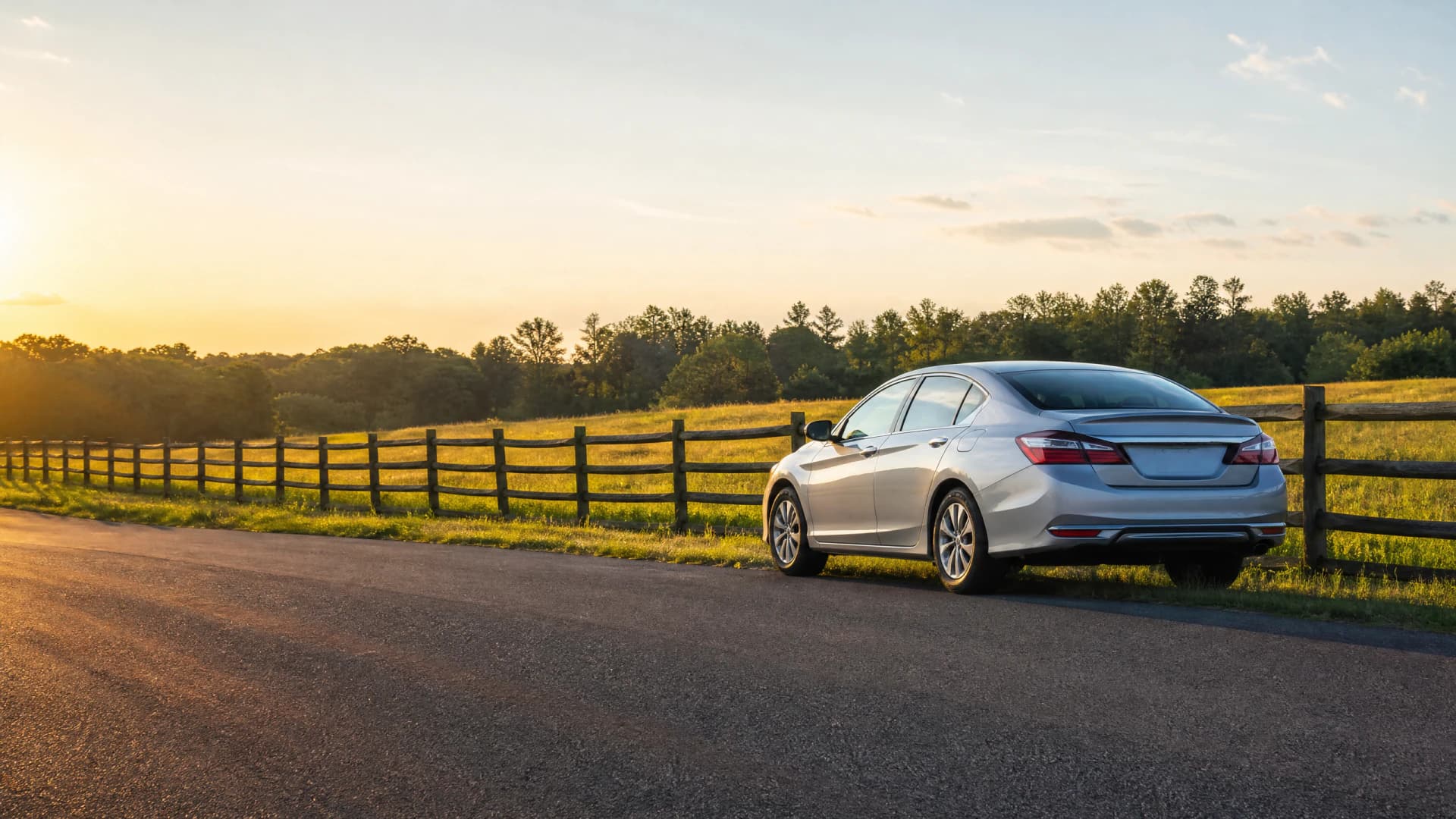
The lender required full coverage to protect their collateral. You now decide whether the same coverage protects your retirement assets better than the premium it costs.
Related Articles

Full Coverage After Payoff — Atlanta GA
6/15/2026

Full Coverage After Payoff — GA Retirees
6/15/2026

Full Coverage After Payoff, Macon GA
6/15/2026

Car Insurance for Retirees in Warner Robins
6/15/2026

Cheapest Car Insurance Retired Couples Warner Robins
6/15/2026

Cheapest Retiree Car Insurance Warner Robins
6/15/2026

What Happens When You Drop It
You call the carrier or your agent and request removal of collision and comprehensive effective the next renewal date or mid-term if you want the change sooner. The carrier issues an updated declaration page showing liability, medical payments if you carry it, and uninsured motorist if required or elected. Collision and comprehensive disappear from the policy. Your premium drops by whatever those two coverages cost: often $300 to $600 a year for a paid-off sedan in moderate condition.
You keep liability, and you should verify the limits. The state minimum is $25,000 per person for injuries. If you cause an accident and the other driver's hospital bill is $60,000, you pay $35,000 out of pocket unless you carry higher limits. Retirees with home equity, retirement accounts, or other assets the injured party can pursue in a lawsuit often carry $100,000 per person or $250,000 per person to protect those assets. Dropping collision does not change your liability exposure; raising your liability limits does.
If the car is damaged and you did not cause the accident, the other driver's liability coverage pays for yours under Georgia's fault system. If the other driver is uninsured, your uninsured motorist property damage coverage pays if you elected it. If you caused the accident or the other driver has no coverage and you dropped collision, you pay to fix or replace your car yourself. That is the tradeoff: lower premium now, self-insured repair cost if something happens.
$25,000
Georgia Liability Minimum Per Person
Georgia requires $25,000 per person, $50,000 per accident for bodily injury, and $25,000 for property damage. Retirement assets remain exposed in a lawsuit when your liability limits are too low to cover the injured party's bills.
Georgia auto insurance state minimum liability data

The Mature-Driver Discount Requires Action
Georgia law requires every insurer writing auto policies in the state to offer at least 10% off your premium when you complete a state-approved defensive driving course. The law applies to drivers 25 and older with no at-fault accidents or moving violations in the prior three years. The catch is this: carriers do not apply the discount unless you complete the course and submit the certificate. Your renewal notice will not mention it. Your agent may not bring it up. If you never take the course, you never get the discount, even though the law says the carrier must offer it.
The course is typically a four-to-six-hour online or in-person program approved by the Georgia Department of Driver Services. You pay the course provider directly, complete the curriculum, and receive a certificate of completion. You send the certificate to your carrier or agent. The carrier applies the discount at the next renewal or mid-term if you request it. Some carriers apply it for three years; others require you to retake the course and resubmit the certificate every renewal cycle. Ask your carrier how long the discount lasts and when you need to renew it.
Low-Mileage Programs and Usage-Based Discounts
You no longer commute. The odometer rolled 4,200 miles last year. Most standard pricing assumes 12,000 to 15,000 miles annually. If your carrier is pricing you at commuter mileage and you are driving a third of that, you are paying for exposure you no longer create. Ask your carrier whether they offer a low-mileage discount and what documentation they require: some accept your word, others want an odometer photo at renewal, a few install a device that logs actual miles.
Usage-based programs go further. The carrier provides a plug-in device or a smartphone app that tracks mileage, braking, speed, and time of day. If you drive infrequently, brake gently, and avoid night driving, the program can reduce your premium beyond the low-mileage discount alone. The tradeoff is data: the carrier sees where, when, and how you drive. Some retirees accept that tradeoff for a lower bill; others do not. The program is optional. If the savings do not justify the monitoring, you decline it and ask for the flat low-mileage discount instead.

Compare Carriers That Treat Retirees Favorably
Not all carriers price retired drivers the same way. Some weight age heavily in their risk model and raise premiums after 65 regardless of your record. Others recognize that retirees drive fewer miles, avoid rush hour, and carry decades of experience, and price accordingly. In Georgia, carriers writing standard and preferred auto policies include State Farm, GEICO, Progressive, Nationwide, Allstate, Travelers, Liberty Mutual, and USAA for military-affiliated families. Each underwrites the senior bracket differently. One may quote you $1,200 annually while another quotes $1,680 for identical coverage.
Request quotes from at least three carriers. Provide the same coverage limits, the same deductibles, the same vehicle, and the same mileage estimate to each. Ask each one whether they offer a mature-driver course discount, what the discount percentage is, how long it lasts, and whether they offer a low-mileage or usage-based program. Compare the final quoted premium after all discounts apply. The carrier that priced you favorably five years ago may not be the lowest today. Your driving profile changed when you retired; the carrier that underwrites that profile best often changed with it.
What Happens When You Keep It
You pay the same premium you paid under the lien. The coverage works the same way: you file a claim, pay the deductible, and the carrier pays the rest up to the car's actual cash value at the time of loss. Actual cash value is not what you paid; it is what the car is worth now, depreciated. A 2017 sedan you bought for $18,000 might be worth $9,500 today. If it is totaled, the carrier pays $9,500 minus your deductible. You use that payment to buy the next car.
The value judgment turns on liquidity. If you have $9,500 in accessible savings and losing the car would not force you to finance the replacement, the collision premium is buying you protection you already self-insure. If you do not have $9,500 liquid and losing the car means financing again at retirement-age interest rates, the collision premium is buying you certainty that one accident will not restart a loan cycle. The decision is not about the car; it is about your balance sheet.
Get Your Free Quote
Get My Georgia Retiree Auto Insurance QuoteFrequently Asked Questions
Does Georgia require a mature-driver discount for retirees?
Yes. Georgia law requires insurers to offer at least 10% off your premium when you complete a state-approved defensive driving course, per O.C.G.A. §33-9-42. The discount applies to drivers 25 and older with a clean record, but you must submit the certificate to receive it.
What happens to my premium if I drop collision and comprehensive?
Your premium decreases by the cost of those two coverages, often $300 to $600 annually for a paid-off sedan. Your liability, medical payments, and uninsured motorist coverages remain unchanged. You self-insure repair costs to your own vehicle going forward.
Can I get a low-mileage discount if I only drive 5,000 miles a year?
Many carriers writing in Georgia offer low-mileage or usage-based discounts for retirees driving well below the standard 12,000-mile assumption. Ask your carrier what documentation they require and whether a telematics program would reduce your rate further.
How do I know if full coverage still makes sense after I pay off my car?
Compare your car's current value to what you would pay out of pocket to replace it. If the car is worth less than ten times your annual collision and comprehensive premium, the coverage may cost more over time than the asset it protects. The decision depends on your liquidity and replacement financing options.
Which Georgia carriers price retirees most favorably?
State Farm, GEICO, Progressive, Nationwide, and USAA for military-affiliated families all write standard auto policies in Georgia, but each underwrites the senior bracket differently. Request quotes from at least three carriers with identical coverage specs to find which prices your profile lowest today.